
Introduction to Dynamic Programming
<h1>Introduction to Dynamic Programming</h1>
<p><b>Dynamic Programming (DP)</b> is an algorithmic technique used to solve complex problems by breaking them down into overlapping subproblems and storing their results to avoid redundant computations.</p>
<p>Dynamic programming is a core topic in <a href="/blogs/introduction-to-data-structures-and-algorithms">Data Structures and Algorithms</a> and is widely applied in <a href="/blogs/introduction-to-artificial-intelligence-ai">Artificial Intelligence</a>, <a href="/blogs/introduction-to-software-engineering">Software Engineering</a>, and system-level problem solving.</p>
<hr/>
<h2>1. Why Dynamic Programming is Needed</h2>
<p>Recursive solutions often recompute the same subproblems multiple times, leading to poor performance.</p>
<p>Dynamic programming optimizes such solutions by storing intermediate results, significantly improving efficiency.</p>
<hr/>
<h2>2. Characteristics of Dynamic Programming Problems</h2>
<ul>
<li><b>Overlapping Subproblems</b></li>
<li><b>Optimal Substructure</b></li>
</ul>
<p>Problems that satisfy these properties are ideal candidates for DP solutions.</p>
<hr/>
<h2>3. Dynamic Programming Approaches</h2>
<ul>
<li><b>Top-Down Approach (Memoization)</b></li>
<li><b>Bottom-Up Approach (Tabulation)</b></li>
</ul>
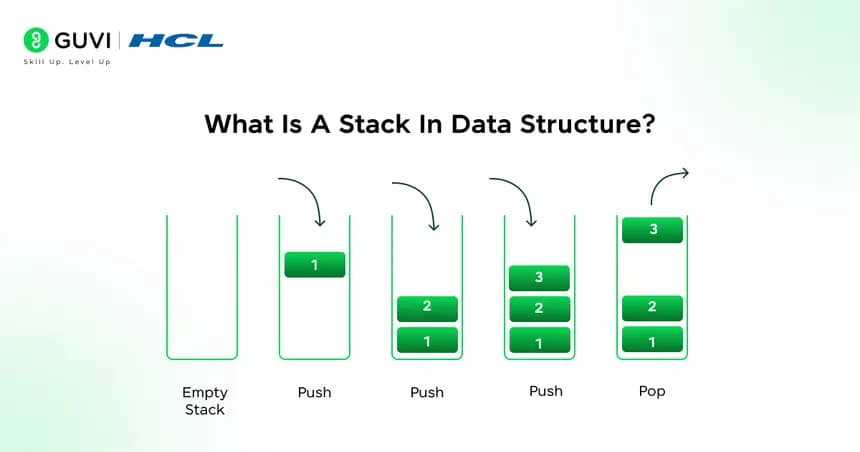
<p>Memoization is an optimization of recursion, which relies on the <a href="/blogs/introduction-to-stack-data-structure">Stack Data Structure</a>.</p>
<hr/>
<h2>4. DP vs Recursion</h2>
<p>While recursion solves problems elegantly, it may lead to exponential time complexity.</p>
<p>Dynamic programming improves recursive solutions by eliminating repeated work.</p>
<p>This optimization is crucial for performance-sensitive systems managed by <a href="/blogs/introduction-to-operating-systems">Operating Systems</a>.</p>
<hr/>
<h2>5. Common Dynamic Programming Problems</h2>
<ul>
<li>Fibonacci Series</li>
<li>Knapsack Problem</li>
<li>Longest Common Subsequence</li>
<li>Matrix Chain Multiplication</li>
</ul>
<p>These problems are widely discussed in competitive programming and AI-related optimization tasks.</p>
<hr/>
<h2>6. Dynamic Programming in AI</h2>
<p>DP is heavily used in reinforcement learning, planning, and decision-making.</p>
<p>AI algorithms rely on DP for optimal policy selection and state optimization.</p>
<hr/>
<h2>7. Dynamic Programming in Software Engineering</h2>
<p>DP techniques improve performance in systems that require optimization and caching.</p>
<p>Examples include route optimization, scheduling systems, and recommendation engines.</p>
<hr/>
<h2>8. Advantages of Dynamic Programming</h2>
<ul>
<li>Significant performance improvement</li>
<li>Efficient handling of complex problems</li>
</ul>
<hr/>
<h2>9. Limitations of Dynamic Programming</h2>
<ul>
<li>High memory usage</li>
<li>Complex problem formulation</li>
</ul>
<hr/>
<p>Dynamic Programming is a powerful optimization technique that plays a crucial role in algorithms, artificial intelligence, and large-scale software systems.</p>
Written by
Admin
Expert education content writer at StuTeach with extensive knowledge in Indian education systems, tutoring methodologies, and student success strategies. Specializes in dp, dynamic-programming, algorithms.