Introduction to Tree Data Structure
Content:
<h1>Introduction to Tree Data Structure</h1>
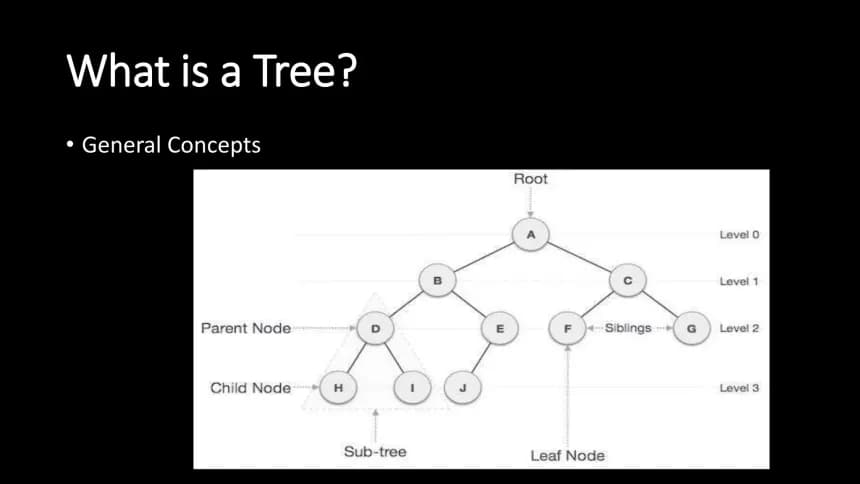
<p>A <b>Tree</b> is a non-linear hierarchical data structure that consists of nodes connected by edges. It is used to represent relationships where one element acts as a parent and others act as children.</p>
<p>Trees are a core topic in <a href="/blogs/introduction-to-data-structures-and-algorithms">Data Structures and Algorithms</a> and play a crucial role in systems such as <a href="/blogs/introduction-to-database-management-systems-dbms">DBMS</a>, <a href="/blogs/introduction-to-operating-systems">Operating Systems</a>, and large-scale applications built using <a href="/blogs/introduction-to-software-engineering">Software Engineering</a>.</p>
<hr/>
<h2>1. Why Tree Data Structure is Needed</h2>
<p>Linear data structures like arrays, stacks, and <a href="/blogs/introduction-to-queue-data-structure">Queues</a> are not suitable for representing hierarchical relationships.</p>
<p>Trees allow efficient organization, searching, and hierarchical representation of data.</p>
<hr/>
<h2>2. Basic Terminology of Trees</h2>
<ul>
<li><b>Root</b> – Topmost node of the tree</li>
<li><b>Parent</b> – A node that has child nodes</li>
<li><b>Child</b> – A node derived from another node</li>
<li><b>Leaf</b> – A node with no children</li>
<li><b>Height</b> – Longest path from root to leaf</li>
</ul>
<p>These concepts are fundamental for understanding algorithms like DFS and BFS.</p>
<hr/>
<h2>3. Types of Trees</h2>
<ul>
<li>Binary Tree</li>
<li>Binary Search Tree (BST)</li>
<li>AVL Tree</li>
<li>Heap</li>
<li>B-Tree</li>
</ul>
<p><b>B-Trees</b> and <b>Heaps</b> are widely used in <a href="/blogs/introduction-to-database-management-systems-dbms">DBMS indexing</a> and memory management systems.</p>
<hr/>
<h2>4. Tree Traversal Techniques</h2>
<ul>
<li>Inorder Traversal</li>
<li>Preorder Traversal</li>
<li>Postorder Traversal</li>
<li>Level Order Traversal</li>
</ul>
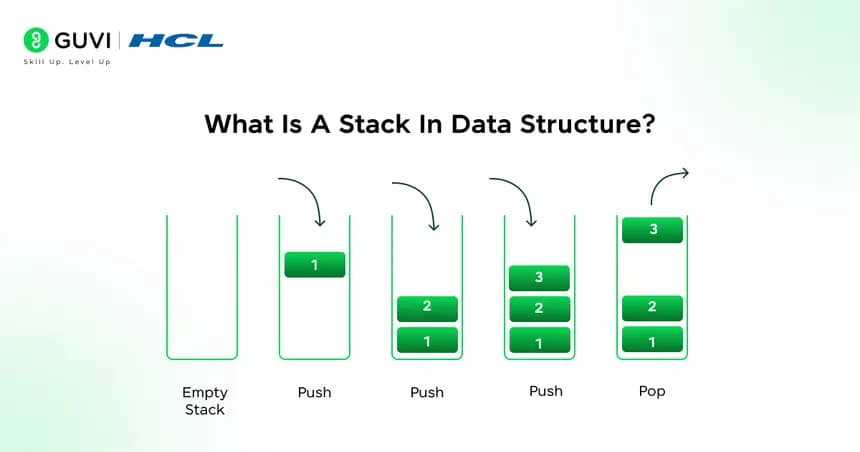
<p>Traversal algorithms rely on <a href="/blogs/introduction-to-stack-data-structure">Stacks</a> and <a href="/blogs/introduction-to-queue-data-structure">Queues</a> internally.</p>
<hr/>
<h2>5. Applications of Trees</h2>
<ul>
<li>File system hierarchy</li>
<li>Database indexing</li>
<li>Expression evaluation</li>
<li>Decision-making algorithms</li>
<li>AI search trees</li>
</ul>
<p>AI systems discussed in <a href="/blogs/introduction-to-artificial-intelligence-ai">Artificial Intelligence</a> heavily rely on tree-based decision structures.</p>
<hr/>
<h2>6. Trees in Operating Systems</h2>
<p>Operating systems use tree structures for:</p>
<ul>
<li>Process hierarchy</li>
<li>Memory allocation</li>
<li>File system organization</li>
</ul>
<p>This tight integration links trees directly with <a href="/blogs/introduction-to-operating-systems">OS design</a>.</p>
<hr/>
<h2>7. Advantages of Trees</h2>
<ul>
<li>Efficient searching and sorting</li>
<li>Natural hierarchical representation</li>
<li>Scalable structure</li>
</ul>
<hr/>
<h2>8. Limitations of Trees</h2>
<ul>
<li>Complex implementation</li>
<li>Extra memory overhead</li>
</ul>
<hr/>
<p>Tree data structures are essential for building efficient algorithms, databases, operating systems, and intelligent software systems.</p>
Written by
Admin
Expert education content writer at StuTeach with extensive knowledge in Indian education systems, tutoring methodologies, and student success strategies. Specializes in tree-data-structure, data-structure, algorithms.