
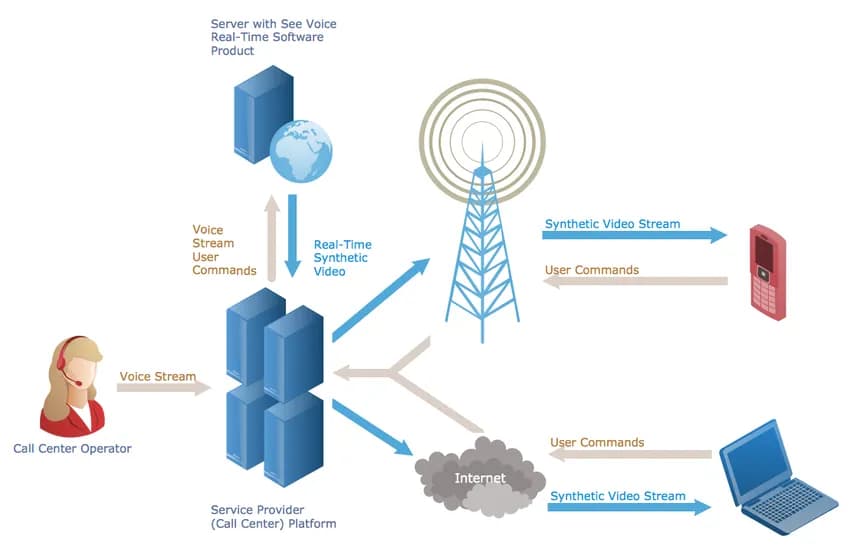
Introduction to Computer Networks
Content:
<h1>Introduction to Computer Networks</h1>
<p>A <b>Computer Network</b> is a collection of interconnected devices that communicate with each other to share data, resources, and services. Computer networks form the backbone of the internet, cloud computing, and modern distributed systems.</p>
<p>Networking is tightly integrated with <a href="/blogs/introduction-to-operating-systems">Operating Systems</a>, <a href="/blogs/introduction-to-database-management-systems-dbms">DBMS</a>, and large-scale systems built using <a href="/blogs/introduction-to-software-engineering">Software Engineering</a> practices.</p>
<hr/>
<h2>1. Purpose of Computer Networks</h2>
<p>The primary purpose of computer networks is to enable communication and resource sharing between devices.</p>
<p>Applications such as <a href="/blogs/introduction-to-artificial-intelligence-ai">Artificial Intelligence</a> platforms and <a href="/blogs/introduction-to-machine-learning">Machine Learning</a> systems rely on networks to transfer large volumes of data across servers and cloud infrastructure.</p>
<hr/>
<h2>2. Types of Computer Networks</h2>
<ul>
<li><b>LAN (Local Area Network)</b> – Covers small areas like homes or offices.</li>
<li><b>WAN (Wide Area Network)</b> – Spans large geographical regions.</li>
<li><b>MAN (Metropolitan Area Network)</b> – Covers cities or metropolitan areas.</li>
<li><b>PAN (Personal Area Network)</b> – Short-range personal device networks.</li>
</ul>
<p>WANs are commonly used to connect distributed databases and cloud systems.</p>
<hr/>
<h2>3. Network Components</h2>
<ul>
<li><b>Nodes</b> – Computers, servers, and devices.</li>
<li><b>Switches</b> – Connect devices within a local network.</li>
<li><b>Routers</b> – Route data between different networks.</li>
<li><b>Transmission Media</b> – Wired or wireless channels.</li>
</ul>
<p>These components are controlled and managed at the system level by <a href="/blogs/introduction-to-operating-systems">Operating Systems</a>.</p>
<hr/>
<h2>4. Network Topologies</h2>
<ul>
<li>Bus Topology</li>
<li>Star Topology</li>
<li>Ring Topology</li>
<li>Mesh Topology</li>
</ul>
<p>Choosing the right topology is important for scalability, reliability, and performance.</p>
<hr/>
<h2>5. Network Protocols</h2>
<p>Protocols define the rules for communication between devices.</p>
<ul>
<li><b>TCP/IP</b> – Core protocol suite of the internet.</li>
<li><b>HTTP/HTTPS</b> – Used for web communication.</li>
<li><b>FTP</b> – File transfer protocol.</li>
<li><b>DNS</b> – Domain name resolution.</li>
</ul>
<p>Web applications built using <a href="/blogs/introduction-to-software-engineering">Software Engineering</a> standards rely heavily on these protocols.</p>
<hr/>
<h2>6. Role of Networks in Distributed Systems</h2>
<p>Modern applications are distributed across multiple servers and locations.</p>
<p>Distributed databases and AI platforms depend on high-speed, reliable <a href="/blogs/introduction-to-computer-networks">Computer Networks</a> to synchronize data and ensure availability.</p>
<hr/>
<h2>7. Networking and Cloud Computing</h2>
<p>Cloud platforms use virtualized networks to connect services, databases, and applications.</p>
<p>Machine learning training and inference pipelines use cloud networking to scale efficiently across regions.</p>
<hr/>
<h2>8. Advantages of Computer Networks</h2>
<ul>
<li>Resource sharing</li>
<li>Fast and reliable communication</li>
<li>Scalability</li>
</ul>
<h2>9. Limitations and Challenges</h2>
<ul>
<li>Security threats</li>
<li>Network congestion</li>
<li>Dependency on infrastructure</li>
</ul>
<hr/>
<p>Computer Networks are a fundamental pillar of modern computing, enabling data-driven systems, cloud services, and intelligent applications to operate at scale.</p>
Written by
Admin
Expert education content writer at StuTeach with extensive knowledge in Indian education systems, tutoring methodologies, and student success strategies. Specializes in computer-science, computer-networks, networking.