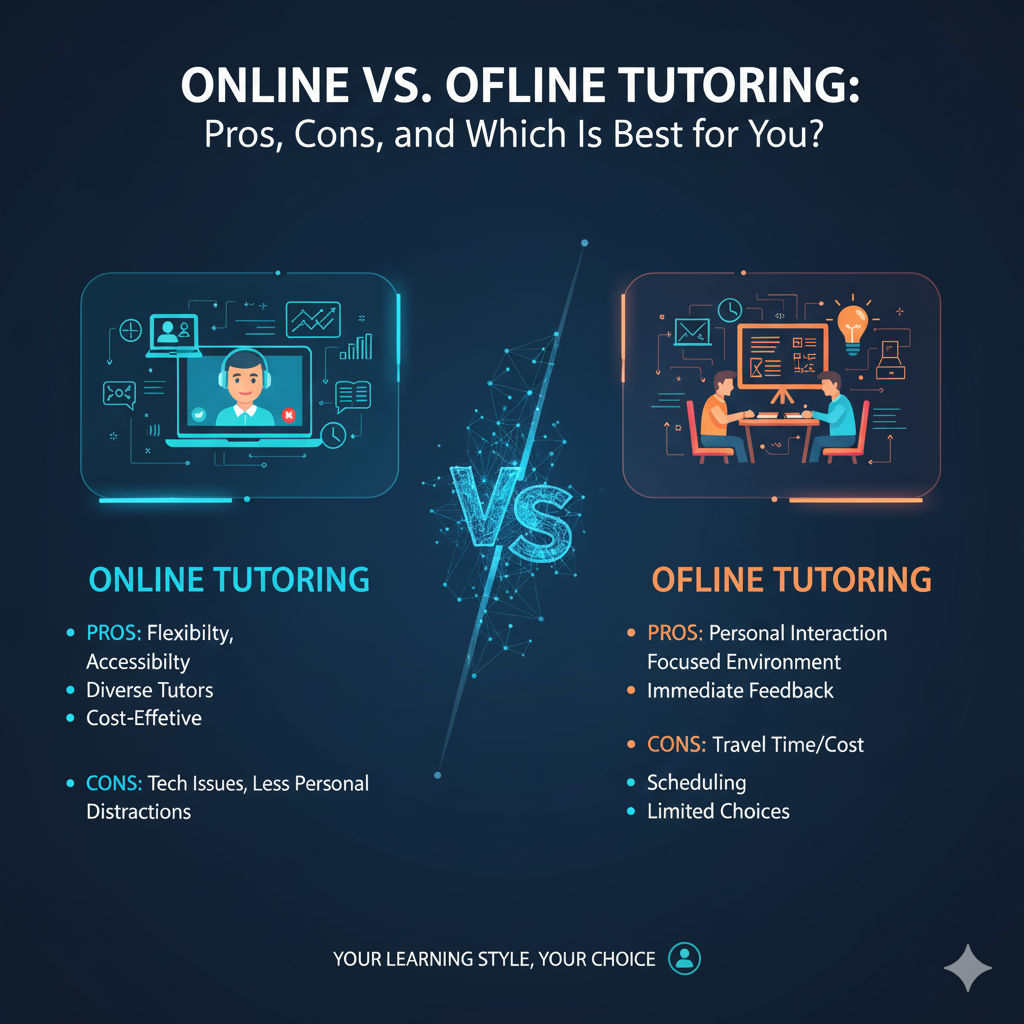
Choosing between online tutoring and offline tutoring has become a major decision for students and parents in the digital age. Both modes of learning come with unique advantages and challenges — what works best depends on your learning goals, schedule, and personal preferences. This guide breaks down the pros and cons of each approach to help you make an informed choice.
1. Flexibility and Convenience
Online Tutoring: Offers unmatched flexibility. Students can attend classes anytime, anywhere, and connect with expert tutors from across the world.
- Ideal for students with busy or irregular schedules.
- No need to commute — saves time and travel costs.
- Easy access to recorded sessions and digital materials.
Offline Tutoring: Provides a fixed routine with scheduled classes, which helps maintain discipline and focus.
- More structured — fewer chances of skipping lessons.
- Face-to-face interaction helps maintain consistency.
Verdict: If you prefer flexibility, go for online tutoring. If you need structure, offline may be better.
2. Interaction and Engagement
Online Tutoring: Interaction happens through video calls, chat, and digital whiteboards. While efficient, it may feel less personal at times.
- Engaging tools like polls, quizzes, and simulations improve interaction.
- Students can message tutors anytime for clarifications.
- However, body language and subtle cues are harder to observe.
Offline Tutoring: Offers direct face-to-face communication, making it easier to build rapport and engagement.
- Tutors can instantly assess a student’s body language or confusion.
- Encourages spontaneous discussions and stronger connection.
Verdict: Offline tutoring wins for deeper personal connection; online excels in accessibility and quick communication.
3. Learning Resources and Tools
Online Tutoring: Uses a wide range of digital tools like screen sharing, e-books, simulations, and cloud-based assignments.
- Interactive visual aids improve understanding.
- Instant access to reference materials and online libraries.
- Progress tracking software gives real-time performance insights.
Offline Tutoring: Relies on textbooks, printed notes, and physical practice materials.
- Hands-on activities work better for subjects like art, lab science, or handwriting.
- Learning feels more tangible and distraction-free.
Verdict: Online tutoring offers better access to technology-driven tools, while offline sessions suit kinesthetic learners.
4. Cost and Accessibility
Online Tutoring: Generally more affordable due to no travel or material costs. It also gives access to global educators, making it ideal for specialized subjects.
- Flexible pricing — pay per session or subscription-based models.
- No geographic limitations — learn from top tutors worldwide.
Offline Tutoring: May cost more due to transportation and location-based pricing. However, it provides direct attention and local networking opportunities.
- Limited tutor options based on area.
- Additional expenses for commuting and materials.
Verdict: Online tutoring wins for affordability and accessibility; offline tutoring can be costlier but more immersive.
5. Discipline and Accountability
Online Tutoring: Requires strong self-discipline. Without physical presence, it’s easier to get distracted by notifications or multitasking.
- Good for self-motivated learners.
- Digital tools can track attendance and progress, but personal accountability depends on the student.
Offline Tutoring: The physical setup and direct supervision encourage students to stay attentive and engaged.
- Personal accountability is naturally built into the environment.
- Regular attendance helps build consistent study habits.
Verdict: Offline tutoring offers stronger accountability; online requires self-motivation and time management.
6. Subject Suitability
Different subjects benefit more from one mode over the other.
- Best for Online Tutoring: Coding, mathematics, theoretical sciences, and language learning.
- Best for Offline Tutoring: Arts, laboratory-based sciences, music, and hands-on skills.
Verdict: Choose based on the subject’s practical or conceptual nature.
7. Safety and Health Considerations
Online Tutoring: Offers a safe, home-based environment — especially valuable during health crises or for students living far from educational hubs.
Offline Tutoring: Encourages social interaction and communication skills, which are vital for overall growth, but requires travel and public exposure.
Verdict: Online tutoring is safer and more convenient; offline builds social confidence and teamwork.
Which One Is Best for You?
The right choice depends on your goals, personality, and lifestyle.
- Choose Online Tutoring if you value flexibility, digital tools, and global tutor access.
- Choose Offline Tutoring if you prefer face-to-face guidance, structure, and personal connection.
- Hybrid Approach: The best of both worlds — combine online theory learning with offline practice for optimal results.
You can explore verified tutors for both online and offline learning at StuTeach — a trusted tutoring platform built to connect students with qualified teachers across subjects. Visit StuTeach Tutors to find expert educators based on your location, subject, and learning preferences.
Final Thoughts
Online and offline tutoring each have unique strengths. What truly matters is consistency, tutor quality, and your commitment to learning. The right tutoring mode isn’t about where you learn — it’s about how effectively you engage with the process.
Remember: A great tutor, whether online or offline, doesn’t just teach — they transform how you think and learn.
Written by: Atanu Saha
Education Writer • Learning Strategy Advisor • Academic Success Coach