Tissues: Types, Structure, and Functions
<body>
<h1>Tissues: Types, Structure, and Functions</h1>
<p>
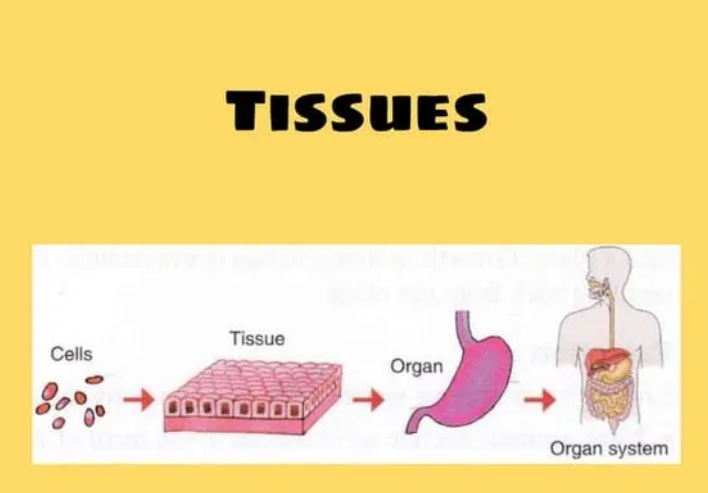
Tissues are groups of similar cells that work together to perform a specific function.
Once students understand cells, the next step in biology is learning how cells organise themselves into tissues.
This chapter helps students see how simple cells combine to form more complex structures in living organisms.
</p>
<p>
Tissues are introduced early in biology for students studying under
CBSE, ICSE, ISC, IB, and A-Level boards.
A clear understanding of this chapter makes topics like organs, organ systems,
and human physiology much easier to learn later.
</p>
<h2>Plant Tissues</h2>
<p>
Plant tissues are mainly responsible for growth, support, and transport.
They are broadly classified into meristematic tissues and permanent tissues.
These tissues help plants grow taller, stay upright, and transport water and food.
</p>
<p>
Students often find plant tissues easier when they connect structure with function.
This method is commonly used by
<a href="https://stuteach.com/tutors/cbse-biology-tutors">CBSE Biology tutors on Stuteach</a>,
who focus on understanding rather than memorising definitions.
</p>
<h2>Animal Tissues</h2>
<p>
Animal tissues are specialised for movement, protection, transport, and control.
They include epithelial tissue, connective tissue, muscular tissue, and nervous tissue.
Each type has a specific role that helps the body function smoothly.
</p>
<p>
Differentiating between these tissues is important for exams.
ICSE students usually practise these concepts in detail
with guidance from
<a href="https://stuteach.com/tutors/icse-biology-tutors">ICSE Biology tutors on Stuteach</a>.
</p>
<h2>Structure and Function of Tissues</h2>
<p>
The structure of a tissue is closely related to its function.
For example, muscular tissue is designed to contract and relax,
while nervous tissue is specialised to transmit signals.
Understanding this link helps students answer application-based questions.
</p>
<p>
ISC students, who study tissues in greater depth,
often strengthen these ideas with help from
<a href="https://stuteach.com/tutors/isc-biology-tutors">ISC Biology tutors on Stuteach</a>.
</p>
<h2>Why Studying Tissues Is Important</h2>
<p>
Tissues form the bridge between cells and organs.
Without understanding tissues, it becomes difficult to learn how organs and systems work.
This chapter builds the base for anatomy and physiology.
</p>
<p>
Students following international curricula like IB and A-Level
are expected to understand tissues conceptually
and explain their functions clearly.
Many learners therefore choose guided learning from
<a href="https://stuteach.com/tutors/ib-biology-tutors">IB Biology tutors on Stuteach</a>
and
<a href="https://stuteach.com/tutors/a_levels-biology-tutors">A-Level Biology tutors on Stuteach</a>.
</p>
<p>
Once students clearly understand different types of tissues,
biology starts to feel more connected and logical.
This chapter plays a key role in building long-term understanding of life sciences.
</p>
</body>
Written by
Admin
Expert education content writer at StuTeach with extensive knowledge in Indian education systems, tutoring methodologies, and student success strategies. Specializes in tissue, epithelial tissue, connective tissue.