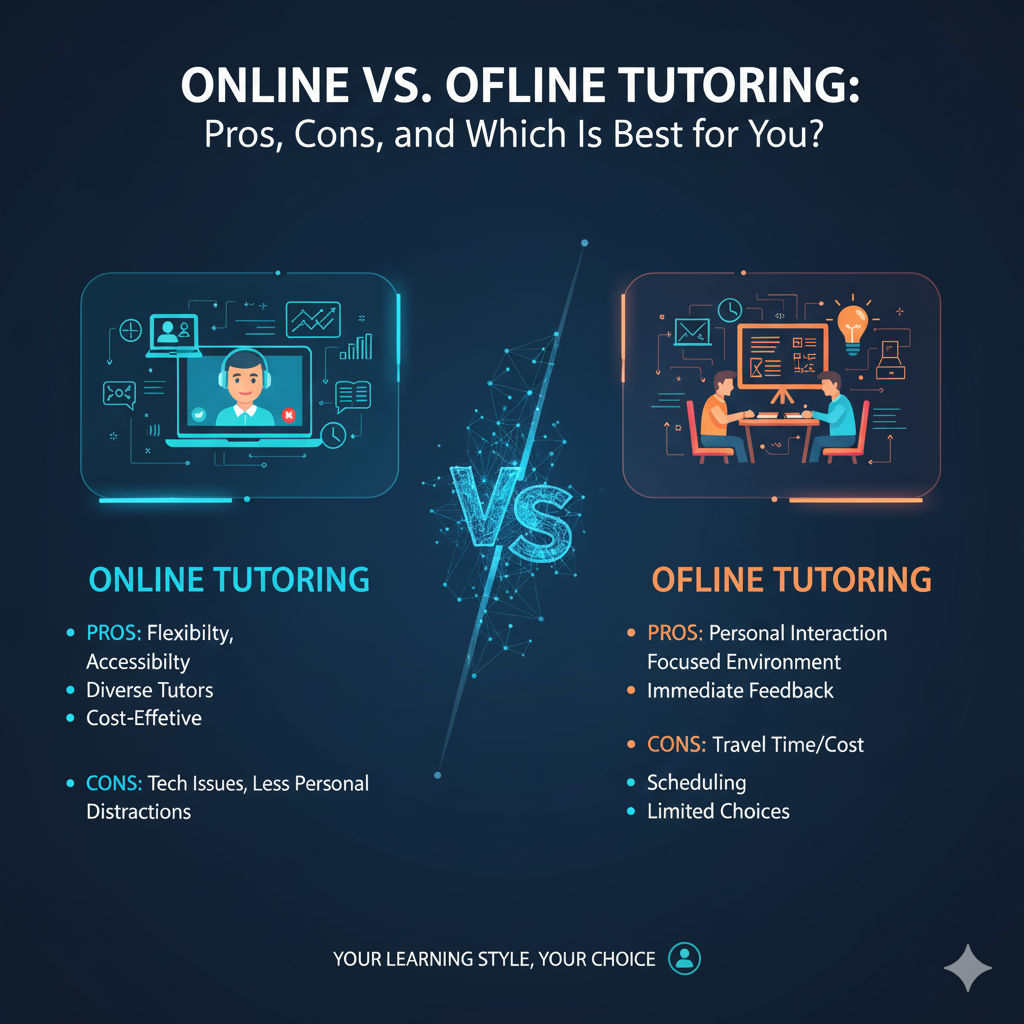
Online vs. Offline Tutoring: Pros, Cons, and Which Is Best for You?
<p>Choosing between <strong>online tutoring</strong> and <strong>offline tutoring</strong> has become a major decision for students and parents in the digital age. Both modes of learning come with unique advantages and challenges — what works best depends on your learning goals, schedule, and personal preferences. This guide breaks down the pros and cons of each approach to help you make an informed choice.</p> <h2><strong>1. Flexibility and Convenience</strong></h2> <p><strong>Online Tutoring:</strong> Offers unmatched flexibility. Students can attend classes anytime, anywhere, and connect with expert tutors from across the world.</p> <ul> <li>Ideal for students with busy or irregular schedules.</li> <li>No need to commute — saves time and travel costs.</li> <li>Easy access to recorded sessions and digital materials.</li> </ul> <p><strong>Offline Tutoring:</strong> Provides a fixed routine with scheduled classes, which helps maintain discipline and focus.</p> <ul> <li>More structured — fewer chances of skipping lessons.</li> <li>Face-to-face interaction helps maintain consistency.</li> </ul> <p><strong>Verdict:</strong> If you prefer flexibility, go for online tutoring. If you need structure, offline may be better.</p> <h2><strong>2. Interaction and Engagement</strong></h2> <p><strong>Online Tutoring:</strong> Interaction happens through video calls, chat, and digital whiteboards. While efficient, it may feel less personal at times.</p> <ul> <li>Engaging tools like polls, quizzes, and simulations improve interaction.</li> <li>Students can message tutors anytime for clarifications.</li> <li>However, body language and subtle cues are harder to observe.</li> </ul> <p><strong>Offline Tutoring:</strong> Offers direct face-to-face communication, making it easier to build rapport and engagement.</p> <ul> <li>Tutors can instantly assess a student’s body language or confusion.</li> <li>Encourages spontaneous discussions and stronger connection.</li> </ul> <p><strong>Verdict:</strong> Offline tutoring wins for deeper personal connection; online excels in accessibility and quick communication.</p> <h2><strong>3. Learning Resources and Tools</strong></h2> <p><strong>Online Tutoring:</strong> Uses a wide range of digital tools like screen sharing, e-books, simulations, and cloud-based assignments.</p> <ul> <li>Interactive visual aids improve understanding.</li> <li>Instant access to reference materials and online libraries.</li> <li>Progress tracking software gives real-time performance insights.</li> </ul> <p><strong>Offline Tutoring:</strong> Relies on textbooks, printed notes, and physical practice materials.</p> <ul> <li>Hands-on activities work better for subjects like art, lab science, or handwriting.</li> <li>Learning feels more tangible and distraction-free.</li> </ul> <p><strong>Verdict:</strong> Online tutoring offers better access to technology-driven tools, while offline sessions suit kinesthetic learners.</p> <h2><strong>4. Cost and Accessibility</strong></h2> <p><strong>Online Tutoring:</strong> Generally more affordable due to no travel or material costs. It also gives access to global educators, making it ideal for specialized subjects.</p> <ul> <li>Flexible pricing — pay per session or subscription-based models.</li> <li>No geographic limitations — learn from top tutors worldwide.</li> </ul> <p><strong>Offline Tutoring:</strong> May cost more due to transportation and location-based pricing. However, it provides direct attention and local networking opportunities.</p> <ul> <li>Limited tutor options based on area.</li> <li>Additional expenses for commuting and materials.</li> </ul> <p><strong>Verdict:</strong> Online tutoring wins for affordability and accessibility; offline tutoring can be costlier but more immersive.</p> <h2><strong>5. Discipline and Accountability</strong></h2> <p><strong>Online Tutoring:</strong> Requires strong self-discipline. Without physical presence, it’s easier to get distracted by notifications or multitasking.</p> <ul> <li>Good for self-motivated learners.</li> <li>Digital tools can track attendance and progress, but personal accountability depends on the student.</li> </ul> <p><strong>Offline Tutoring:</strong> The physical setup and direct supervision encourage students to stay attentive and engaged.</p> <ul> <li>Personal accountability is naturally built into the environment.</li> <li>Regular attendance helps build consistent study habits.</li> </ul> <p><strong>Verdict:</strong> Offline tutoring offers stronger accountability; online requires self-motivation and time management.</p> <h2><strong>6. Subject Suitability</strong></h2> <p>Different subjects benefit more from one mode over the other.</p> <ul> <li><strong>Best for Online Tutoring:</strong> Coding, mathematics, theoretical sciences, and language learning.</li> <li><strong>Best for Offline Tutoring:</strong> Arts, laboratory-based sciences, music, and hands-on skills.</li> </ul> <p><strong>Verdict:</strong> Choose based on the subject’s practical or conceptual nature.</p> <h2><strong>7. Safety and Health Considerations</strong></h2> <p><strong>Online Tutoring:</strong> Offers a safe, home-based environment — especially valuable during health crises or for students living far from educational hubs.</p> <p><strong>Offline Tutoring:</strong> Encourages social interaction and communication skills, which are vital for overall growth, but requires travel and public exposure.</p> <p><strong>Verdict:</strong> Online tutoring is safer and more convenient; offline builds social confidence and teamwork.</p> <hr/> <h2><strong>Which One Is Best for You?</strong></h2> <p>The right choice depends on your goals, personality, and lifestyle.</p> <ul> <li>Choose <strong>Online Tutoring</strong> if you value flexibility, digital tools, and global tutor access.</li> <li>Choose <strong>Offline Tutoring</strong> if you prefer face-to-face guidance, structure, and personal connection.</li> <li><strong>Hybrid Approach:</strong> The best of both worlds — combine online theory learning with offline practice for optimal results.</li> </ul> <p>You can explore verified tutors for both online and offline learning at <a href="https://stuteach.com" target="_blank"><strong>StuTeach</strong></a> — a trusted tutoring platform built to connect students with qualified teachers across subjects. Visit <a href="https://stuteach.com/tutors" target="_blank"><strong>StuTeach Tutors</strong></a> to find expert educators based on your location, subject, and learning preferences.</p> <hr/> <h2><strong>Final Thoughts</strong></h2> <p>Online and offline tutoring each have unique strengths. What truly matters is consistency, tutor quality, and your commitment to learning. The right tutoring mode isn’t about where you learn — it’s about how effectively you engage with the process.</p> <p><strong>Remember:</strong> A great tutor, whether online or offline, doesn’t just teach — they transform how you think and learn.</p> <hr/> <p><strong>Written by:</strong> Atanu Saha<br/> <em>Education Writer • Learning Strategy Advisor • Academic Success Coach</em></p>
Written by
Admin
Expert education content writer at StuTeach with extensive knowledge in Indian education systems, tutoring methodologies, and student success strategies. Specializes in online tutoring, offline tutoring, in-person tutoring.