
Introduction to Software Engineering
Content:
<h1>Introduction to Software Engineering</h1>
<p><b>Software Engineering</b> is the disciplined and systematic approach to designing, developing, testing, deploying, and maintaining software systems. It provides the structure required to build reliable, scalable, and maintainable applications.</p>
<p>Software engineering acts as the glue that connects technical domains such as <a href="/blogs/introduction-to-operating-systems">Operating Systems</a>, <a href="/blogs/introduction-to-database-management-systems-dbms">DBMS</a>, <a href="/blogs/introduction-to-computer-networks">Computer Networks</a>, and intelligent technologies like <a href="/blogs/introduction-to-artificial-intelligence-ai">Artificial Intelligence</a>.</p>
<hr/>
<h2>1. Why Software Engineering is Important</h2>
<p>As software systems grow in size and complexity, ad-hoc coding approaches become unreliable. Software engineering ensures that software meets user requirements, performs efficiently, and remains maintainable over time.</p>
<p>Large systems such as AI platforms and distributed databases cannot be built reliably without strong <a href="/blogs/introduction-to-software-engineering">Software Engineering</a> practices.</p>
<hr/>
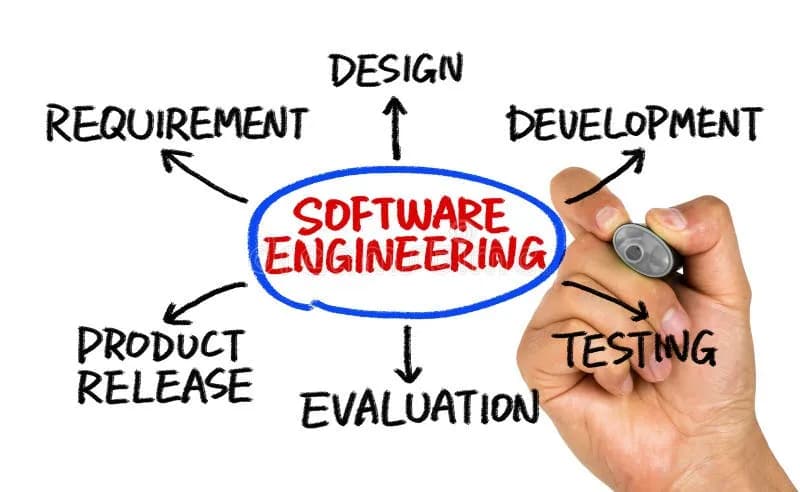
<h2>2. Software Development Life Cycle (SDLC)</h2>
<ul>
<li><b>Requirement Analysis</b> – Understanding what the system must do.</li>
<li><b>System Design</b> – Defining architecture and components.</li>
<li><b>Implementation</b> – Writing and integrating code.</li>
<li><b>Testing</b> – Detecting and fixing defects.</li>
<li><b>Deployment</b> – Delivering software to users.</li>
<li><b>Maintenance</b> – Updating and improving the system.</li>
</ul>
<p>Each phase of the SDLC interacts with systems such as databases, networks, and operating systems.</p>
<hr/>
<h2>3. Software Development Models</h2>
<ul>
<li><b>Waterfall Model</b> – Sequential development process.</li>
<li><b>Agile Model</b> – Iterative and flexible development.</li>
<li><b>Spiral Model</b> – Risk-driven development.</li>
</ul>
<p>Agile development is widely used in AI and web-based systems due to its adaptability.</p>
<hr/>
<h2>4. Role of Software Engineering in AI and ML</h2>
<p>AI and <a href="/blogs/introduction-to-machine-learning">Machine Learning</a> systems are not just models; they are complete software products.</p>
<p>Software engineering ensures that ML pipelines are versioned, tested, scalable, and maintainable.</p>
<hr/>
<h2>5. Software Architecture</h2>
<p>Architecture defines the high-level structure of a software system.</p>
<ul>
<li>Monolithic Architecture</li>
<li>Microservices Architecture</li>
<li>Layered Architecture</li>
</ul>
<p>Modern cloud systems use microservices that communicate over <a href="/blogs/introduction-to-computer-networks">Computer Networks</a> and store data using <a href="/blogs/introduction-to-database-management-systems-dbms">DBMS</a>.</p>
<hr/>
<h2>6. Quality Attributes of Software</h2>
<ul>
<li>Reliability</li>
<li>Scalability</li>
<li>Maintainability</li>
<li>Security</li>
<li>Performance</li>
</ul>
<p>These attributes are critical for large-scale distributed systems and AI platforms.</p>
<hr/>
<h2>7. Software Engineering Tools</h2>
<ul>
<li>Version control systems</li>
<li>Testing frameworks</li>
<li>CI/CD pipelines</li>
<li>Monitoring tools</li>
</ul>
<p>These tools enable teams to build robust systems efficiently.</p>
<hr/>
<h2>8. Advantages of Software Engineering</h2>
<ul>
<li>Predictable development process</li>
<li>High-quality software output</li>
<li>Reduced long-term cost</li>
</ul>
<h2>9. Challenges</h2>
<ul>
<li>Managing complex requirements</li>
<li>Ensuring security and performance</li>
</ul>
<hr/>
<p>Software Engineering provides the foundation required to build and maintain complex systems across all domains of modern computing.</p>
Written by
Admin
Expert education content writer at StuTeach with extensive knowledge in Indian education systems, tutoring methodologies, and student success strategies. Specializes in software-engineering, sdlc, agile.