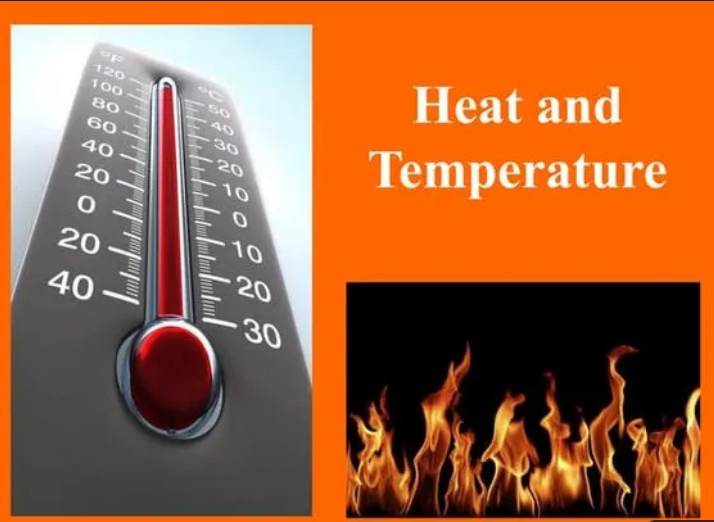
Heat and Temperature: Thermal Properties of Matter
<body>
<h1>Heat and Temperature: Thermal Properties of Matter</h1>
<p>
Heat and temperature are terms students hear almost every day,
but in physics, they have very specific meanings.
Many students use these words interchangeably,
which often leads to confusion in exams.
This chapter helps clear that confusion by explaining how heat and temperature are different
and how they affect matter.
</p>
<p>
This topic is included early in the syllabus for CBSE, ICSE, ISC, IB, and A-Level students
because thermal concepts are used across many chapters in physics.
A clear understanding here makes future topics much easier to grasp.
</p>
<h2>Heat</h2>
<p>
Heat is a form of energy that flows from a hotter body to a colder body.
It is not something an object contains,
but something that is transferred due to a temperature difference.
This idea is important for understanding everyday processes like cooking and cooling.
</p>
<p>
Students usually understand heat better when it is explained using real-life examples.
This approach is commonly used by
<a href="https://stuteach.com/tutors/cbse-physics-tutors">CBSE Physics tutors on Stuteach</a>,
who focus on conceptual clarity before introducing formulas.
</p>
<h2>Temperature</h2>
<p>
Temperature tells us how hot or cold an object is.
It is related to the average kinetic energy of particles in a substance.
Two objects can have the same temperature but different amounts of heat,
which is a key point students need to remember.
</p>
<p>
Understanding temperature helps students read thermometers correctly
and avoid common mistakes in numericals.
ICSE students often practise such questions
with guidance from
<a href="https://stuteach.com/tutors/icse-physics-tutors">ICSE Physics tutors on Stuteach</a>.
</p>
<h2>Thermal Properties of Matter</h2>
<p>
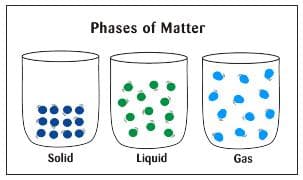
Thermal properties describe how materials respond to heat.
Properties such as expansion, conductivity, and specific heat
explain why different substances behave differently when heated.
</p>
<p>
These concepts become more detailed in higher classes,
especially for ISC students who study thermal behaviour mathematically.
Many of them strengthen their understanding with support from
<a href="https://stuteach.com/tutors/isc-physics-tutors">ISC Physics tutors on Stuteach</a>.
</p>
<h2>Why This Chapter Is Important</h2>
<p>
Heat and temperature play a role in weather, engines,
household appliances, and even human body processes.
Understanding thermal properties helps students connect physics with daily life.
</p>
<p>
Students following international curricula like IB and A-Level
are often expected to apply these ideas to real-world situations.
Many learners therefore prefer learning with guidance from
<a href="https://stuteach.com/tutors/ib-physics-tutors">IB Physics tutors on Stuteach</a>
and
<a href="https://stuteach.com/tutors/a_levels-physics-tutors">A-Level Physics tutors on Stuteach</a>.
</p>
<p>
Once students clearly understand heat, temperature, and thermal properties,
physics starts to feel more intuitive.
This chapter builds strong fundamentals for advanced topics in thermodynamics.
</p>
</body>
Written by
Admin
Expert education content writer at StuTeach with extensive knowledge in Indian education systems, tutoring methodologies, and student success strategies. Specializes in thermal properties of matter, heat and temperature, thermal conductivity.